Sestriere
Sestriere is about 241 km from Geneva Airport, roughly 2 h 45 min by road through the Fréjus Tunnel and up from Oulx and Cesana to the Colle del Sestriere. Built on a high pass in the 1930s, it is the hub of the Via Lattea and hosted the alpine events of the 2006 Turin Winter Olympics. AirportsTransfers.ch takes you there by private car at a fixed price per vehicle.
- Distance from GVA: about 241 km
- Drive time: around 2 h 45 min
- Border crossing: into France, then into Italy via the Fréjus Tunnel
- Ski area: Via Lattea, with Sestriere at its centre
- Suits: strong intermediates, good skiers and high-altitude snow seekers
Getting there from Geneva Airport
The route uses the A41 from Geneva to Chambéry and the A43 up the Maurienne valley to Modane. After the Fréjus Tunnel, you emerge in Italy at Bardonecchia and drop down to Oulx, where you leave the motorway and climb the upper Susa valley to Cesana Torinese.
From Cesana the road climbs in a series of bends up to the Colle del Sestriere, the pass between the Susa and Chisone valleys. This final section is the part most affected by snow, and winter equipment is required. Because Sestriere stands high and open on the pass, it can be windy, so wrap up before stepping out of the car.
The ski area
Sestriere sits at the centre of the Via Lattea, the cross-border ski area that links it with Sauze d'Oulx, Sansicario, Cesana, Claviere and Montgenèvre in France. The slopes directly around Sestriere are among the highest in the circuit, rising towards Monte Sises and Monte Motta, which helps snow quality and extends the season compared with the lower, wooded parts of the area.
The runs here have a strong racing tradition: Sestriere hosted the 1997 Alpine World Ski Championships and the alpine events of the 2006 Olympics, and some of its pistes are steep and long enough to impress strong skiers. There are still plenty of wide blues and reds for intermediates, and beginner areas close to the resort. Off-piste opportunities are good after snowfall, preferably with a local guide.
A resort with a history
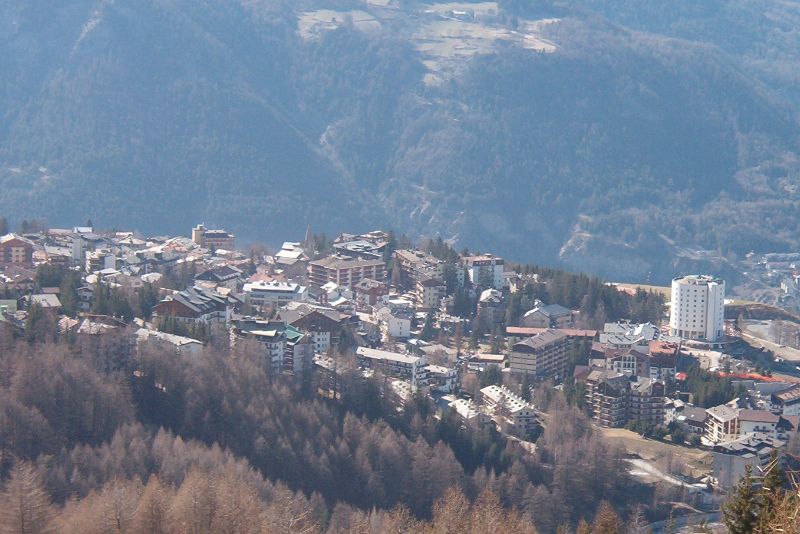
Sestriere was one of the first purpose-built ski resorts in the Alps, created in the 1930s on the initiative of the Agnelli family, the founders of Fiat. Its two cylindrical tower hotels from that period remain the resort's landmark. The village is compact and functional, with apartments, hotels and shops close to the lifts, and a lively atmosphere during the Italian holidays and at weekends.
Because it was designed for skiing, most accommodation is within walking distance of the slopes. Pragelato and the Chisone valley, on the other side of the pass, offer a quieter, more rural alternative.
When to go
The season generally runs from early December to early April. Sestriere's altitude makes it one of the more snow-sure parts of the Via Lattea, and the cold, dry conditions of January often give excellent piste quality. February is the busiest month, with Italian, French and other school holidays. Turin is close enough for day trips, so weekends are fuller than weekdays.
March brings longer days and sunnier conditions, and the high slopes keep their snow well, while lower valleys in the circuit may already be softening.
Sestriere's open, treeless setting means that the views are wide on clear days but visibility can drop quickly in a storm. On those days, the wooded runs towards Sansicario and Sauze d'Oulx are a sensible alternative, which is one of the advantages of staying in the middle of such a large linked area.
Practical tips
Saturday mornings are the busiest on the A43 and at the Fréjus Tunnel. Choose an early departure or a weekday arrival if possible. Carry valid travel documents for everyone, as the route crosses into Italy, and bring euros for small purchases.
The pass can be windy and cold: pack warm layers, face protection and goggles. For the return, plan around three and a half hours to Geneva Airport, more after a heavy snowfall on the road down to Cesana and Oulx.
Reserving your transfer
AirportsTransfers.ch displays the fixed price per vehicle before you confirm, and payment is made online by card, Apple Pay or Google Pay. A chauffeur meets you in arrivals with a name sign and tracks your flight; if it is late, the waiting is included. The Mercedes E-Class suits three passengers with three bags, the V-Class up to seven passengers with skis, and the Sprinter minibus larger groups or ski clubs.
Declare skis and snowboards when booking, request child seats if needed and book your return at the same time. For any question, call or WhatsApp +41 78 346 56 77, at any time of day.