The Lötschberg car train is a rail shuttle that carries cars, vans and coaches through the Lötschberg tunnel between Kandersteg in the Bernese Oberland and Goppenstein in Valais, a crossing of around a quarter of an hour. There is no road over the mountain at this point, so the shuttle is the direct link between the two regions. For travellers based in Geneva it matters most when combining a Valais resort with Gstaad, Interlaken or the Jungfrau region, and AirportsTransfers.ch chauffeurs use it regularly on such trips.
- Connects: Kandersteg (Bernese Oberland) and Goppenstein (Valais)
- Crossing: about 15 minutes through the Lötschberg tunnel
- Service: regular departures throughout the day, more frequent at busy times
- On board: passengers stay in their vehicle
- Useful for: linking Valais resorts with the Bernese Oberland
Why the car train exists
The Bernese Alps form a high wall between the canton of Bern and the Rhône valley, and no road crosses them between the Grimsel Pass in the east and the passes far to the west. The Lötschberg rail tunnel, opened in 1913, cut straight through, and from early on it carried road vehicles on flat wagons. Later, the much longer Lötschberg base tunnel was built deeper down for fast passenger and freight trains, but the original tunnel remained the route for the car shuttle. The result is a short, reliable link that turns what would be a long detour around the mountains into a crossing measured in minutes.
How loading and the crossing work
At Kandersteg or Goppenstein you follow signs to the car-train terminal, where tickets are bought at a booth or machine before the loading area. Vehicles are directed in a line onto the train, driving forward from one wagon to the next until the staff signal to stop. Engines are switched off, handbrakes on, and passengers remain seated inside the car for the crossing; in the tunnel it is dark and noisy, but the journey passes quickly. At the other end you simply drive off. It is a straightforward system once you have done it once, though first-timers sometimes find the driving onto the narrow wagons a little unnerving. Larger vehicles such as vans and minibuses are carried too, on suitable wagons.
Frequency and timing
Trains run frequently from early morning to late evening, with additional departures at busy periods such as winter Saturdays and the start of holidays. Reservations are not usually needed: you join the queue and board the next available train. On peak days, particularly winter weekends when skiers move between the Oberland and Valais, queues can mean waiting for one or more trains, so timing still matters. Outside those periods you generally drive almost straight on. Your chauffeur will know the busy windows and plan the departure accordingly.
Where the route takes you
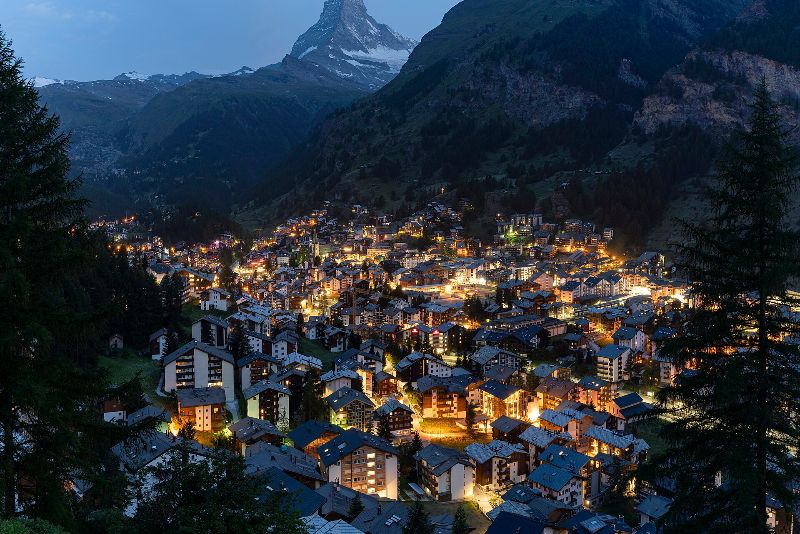
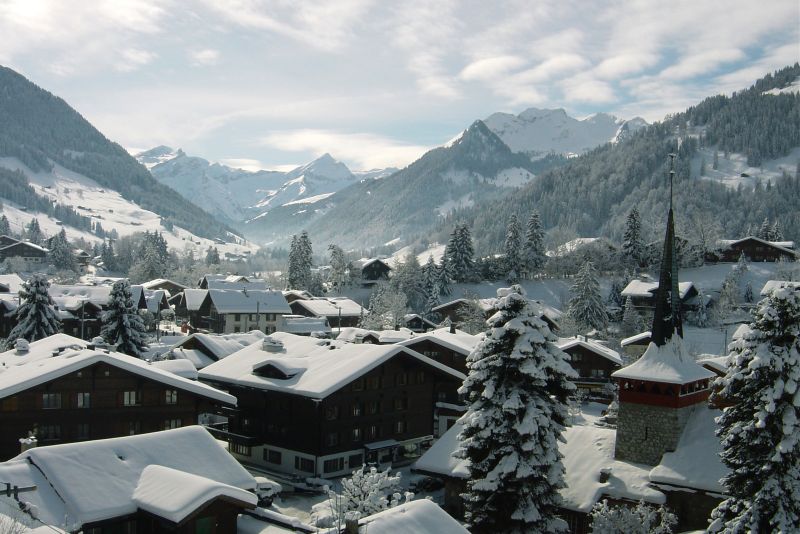
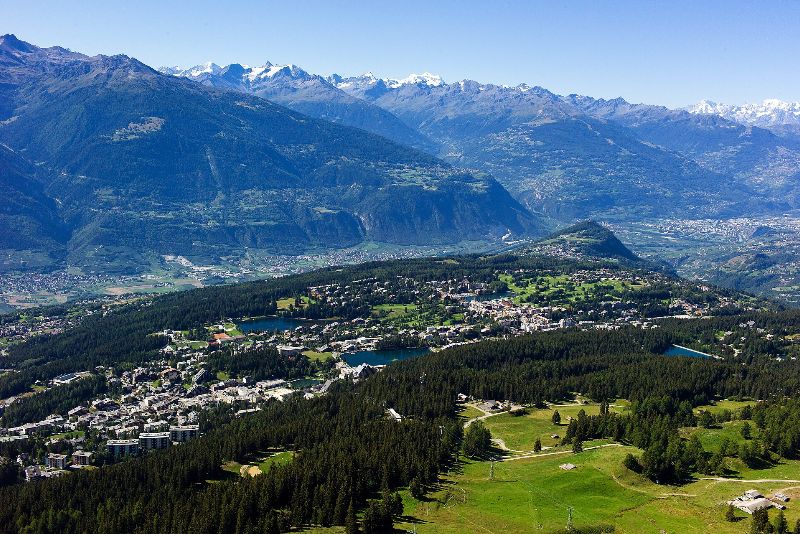
On the Bernese side, Kandersteg sits at the head of a valley that descends to Frutigen and Spiez on Lake Thun, from where Interlaken, Grindelwald, Wengen, Adelboden and Gstaad are within easy reach. On the Valais side, Goppenstein lies at the mouth of the Lötschental, a beautiful, traditional valley, and the road descends quickly to Gampel and Steg in the Rhône valley. From there it is a short drive to Leukerbad, Crans-Montana, Visp and the valleys leading to Zermatt and Saas-Fee. That makes the car train a natural part of trips such as Zermatt to Interlaken or Crans-Montana to Gstaad, journeys that would otherwise need a long loop via Lake Geneva.
From Geneva: when is it worth it?
For a simple transfer from Geneva Airport to a Valais resort, the car train is not needed: the motorway along Lake Geneva and up the Rhône valley is the natural route, and Crans-Montana, for example, is about 190 km and 2 h 15 away. Likewise, Bern and the Oberland are reached directly via Lausanne and Fribourg. The Lötschberg shuttle comes into play for multi-stop itineraries, for clients moving between resorts mid-stay, or for transfers to the Oberland that start in Valais. In those cases it typically saves a considerable amount of driving compared with going all the way around.
Combining resorts with AirportsTransfers.ch
If your holiday links Valais and the Bernese Oberland, AirportsTransfers.ch can organise each leg, with the car-train crossing included in the fixed price per vehicle that you see before paying online by card, Apple Pay or Google Pay. On arrival at Geneva Airport, your driver waits with a name sign, having tracked your flight, and waiting is included if you are delayed. Travel in a Mercedes E-Class or S-Class, a V-Class for up to seven passengers with skis, or a Sprinter minibus; child seats come on request, and skis should be noted when you book. Questions are answered around the clock on +41 78 346 56 77, by phone or WhatsApp.