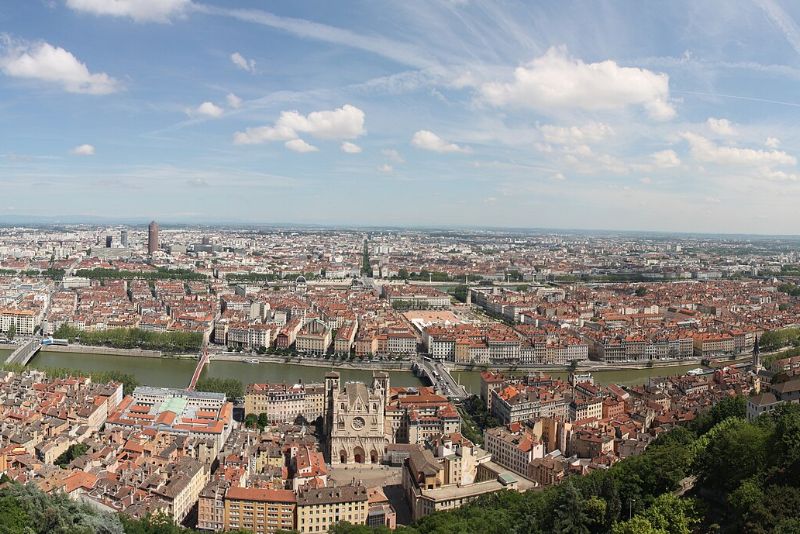
The road from Geneva Airport to Marseille follows the Rhône south: Lyon is about 150 km and 1 h 45 from GVA, and beyond it the motorway runs through the wine villages and Roman towns of the Rhône valley towards Provence, the Camargue and the Mediterranean. A five- to seven-day itinerary with stops in Avignon, Arles and Marseille makes the most of it. AirportsTransfers.ch can drive the whole route, or bring you as far as Lyon if you continue by train.
- Route: south via Lyon, then down the Rhône valley motorway
- Reference distance: Lyon about 150 km, 1 h 45 from GVA
- Border crossing: the route crosses the border into France just outside Geneva
- Ideal length: five to seven days
- Highlights: Orange's Roman theatre, Avignon's Palace of the Popes, Arles, the Camargue, Aigues-Mortes, Marseille
Down the Rhône valley
The Rhône, which flows out of Lake Geneva past the city, is the thread of this journey. After Lyon, the valley narrows between vineyards: the steep terraces of Côte-Rôtie and Hermitage, then the broader slopes of the southern Côtes du Rhône. The landscape changes visibly as you head south, with cypresses, olive trees and Provençal stone farmhouses appearing around Montélimar, famous for its nougat. Orange holds a Roman theatre with its stage wall still standing, among the best preserved in the world, along with a triumphal arch; both are UNESCO-listed. Châteauneuf-du-Pape, a little to the south, gives its name to one of the best-known wines of the region.
Avignon and Arles
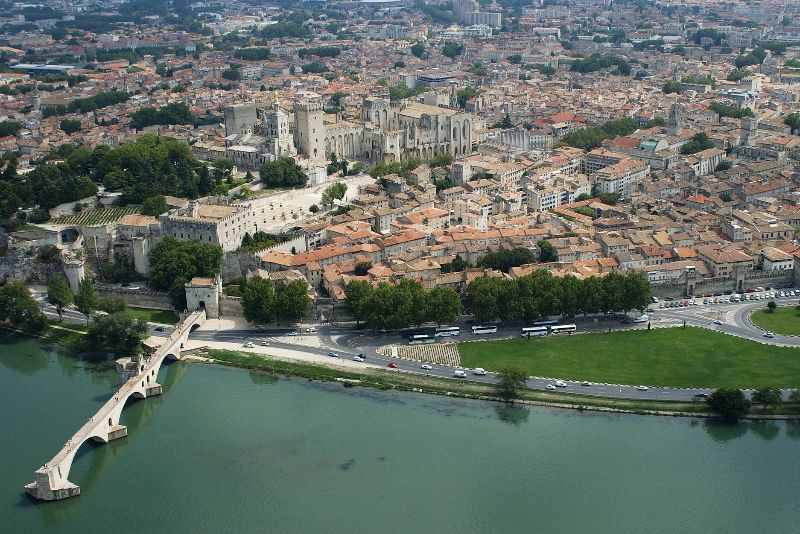
Avignon was the seat of the popes in the fourteenth century, and the Palais des Papes, a vast Gothic fortress-palace, dominates the walled city. The famous half-bridge, the Pont Saint-Bénézet, reaches out into the river, immortalised in the children's song. In summer, the city hosts a major theatre festival and becomes very lively. Arles, further south where the Rhône divides into its delta, has a Roman amphitheatre still used for events, an ancient theatre and Romanesque cloisters at Saint-Trophime. Vincent van Gogh lived and painted here, and many of his subjects can still be recognised in the town.
The Camargue: wetlands, horses and flamingos
Between the two arms of the Rhône delta, the Camargue is a flat landscape of lagoons, salt marshes, reed beds and rice fields, protected as a regional nature park. It is known for its greater flamingos, which gather on the shallow lagoons, for its white horses and for the black bulls raised by local herdsmen, the gardians. The Pont de Gau ornithological park near Saintes-Maries-de-la-Mer is an easy place to see the birds up close. Saintes-Maries itself is a whitewashed seaside town with a fortified church and long sandy beaches. To the west, Aigues-Mortes is a perfectly preserved walled town built in the thirteenth century, and nearby salt pans tint the water pink. Local specialities include Camargue rice, fleur de sel and a hearty bull stew.
Arles makes the most convenient base for the Camargue, as it sits at the head of the delta and has a good choice of places to stay within its old streets. Alternatively, a traditional mas, a Provençal farmhouse surrounded by marshland, gives a stronger sense of the landscape, with horses grazing outside the window. Distances within the delta are short, but the roads are small and straight, and the best way to explore is unhurried: stop at a lagoon viewpoint, then continue towards the sea.
Marseille: Old Port and calanques
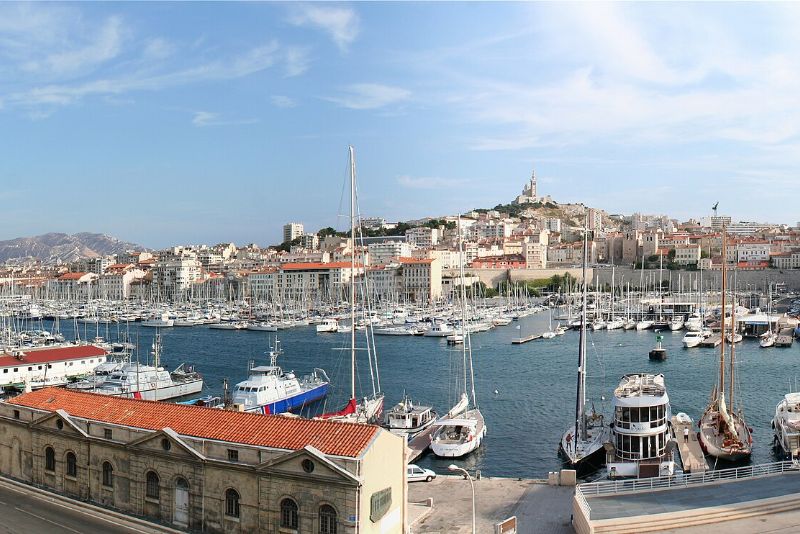
Marseille, France's oldest city, founded by Greek sailors, centres on its Vieux-Port, where fishermen still sell their catch in the mornings. The basilica of Notre-Dame de la Garde watches over the city from its hilltop, with a view across the islands and the Château d'If, made famous by The Count of Monte Cristo. The MuCEM, a museum devoted to Mediterranean civilisations, sits in a striking modern building linked by a footbridge to Fort Saint-Jean. The Panier, the old quarter, is full of steep lanes and street art. East of the city, the Calanques national park protects limestone inlets with turquoise water, best seen by boat or on foot. Bouillabaisse, the fish stew, is the city's signature dish.
- Access to some calanques is restricted in summer during high fire risk.
- The mistral, a strong north wind, can blow for days in the Rhône valley and Provence.
- French motorways are tolled; the chauffeur handles this.
Book your Rhône valley chauffeur
Booking with AirportsTransfers.ch is done online, with a fixed price per vehicle displayed before you pay by card, Apple Pay or Google Pay. Your chauffeur meets you in Geneva Airport arrivals with a name sign, tracks your flight and includes waiting time if it is delayed. The Mercedes E-Class suits up to three travellers, the S-Class adds comfort over long distances, and the V-Class van takes up to seven passengers with luggage. Child seats are provided on request, and return transfers can be booked at the same time. Call or WhatsApp +41 78 346 56 77 for a tailored route.