The winter drive from Geneva Airport to Chamonix covers about 90 km and normally takes around 1 h 15, almost all of it on a well-maintained motorway that is cleared quickly after snowfall. The trickier part is the final climb up the Arve valley, where snow, ice and Saturday traffic can slow things down. AirportsTransfers.ch plans winter pick-ups with that last stretch in mind.
- Distance and time: around 90 km, about 1 h 15 in normal conditions
- Route: border into France, then the A40 motorway and the main road up the valley
- Winter equipment: required in Haute-Savoie during the winter period (snow tyres or chains carried)
- Busiest times: Saturday changeover days and school holiday weekends
- Best advice: allow extra margin on departure days and after heavy snowfall
The route in brief
From the airport the road skirts the edge of Geneva and crosses the border into France within a few minutes. From there the A40 motorway, often called the Autoroute Blanche, heads south-east past the Arve valley towns towards Sallanches and Passy. It is a wide, modern motorway with gentle gradients for most of its length, and it is the main artery for skiers heading to Chamonix, Megève and the Saint-Gervais area.
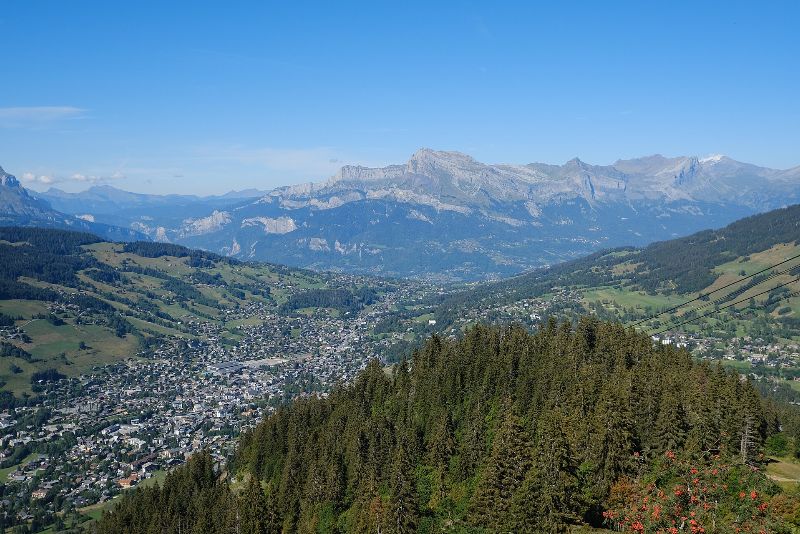
At the end of the motorway section the road becomes a fast main road that climbs steadily towards Chamonix, passing through tunnels and over viaducts with views of the Mont Blanc massif on clear days. This final climb is short in distance but it is where winter weather has the most influence on journey time. It also carries traffic for the Mont Blanc Tunnel, so lorries heading for Italy share the road with ski traffic.
Typical winter conditions
On most winter days the drive is straightforward. The motorway is usually dry or simply wet, and temperatures in the valley can be milder than in the resort itself. Fog sometimes sits over the Geneva basin and the lower Arve valley in winter, especially in the mornings, which reduces visibility but rarely stops traffic.
Snowfall changes the picture. When a storm arrives, snow can settle on the higher part of the route long before the motorway sees any, and the climb towards Chamonix may become slushy or icy. Temperatures often drop sharply after dark, and wet roads that were harmless in the afternoon can freeze in the evening. Late-night arrivals after a snowy day therefore need a little more patience than a midday transfer in sunshine.
Snow clearing and road maintenance
The French road authorities in Haute-Savoie are well used to winter. The motorway and the main road to Chamonix are priority routes for ploughing and gritting, and teams usually work through the night during heavy snowfall. In most cases the road reopens or becomes fully passable within hours. What causes delays is rarely the snow itself but the traffic it creates: slower speeds, cars stopping to fit chains and the occasional vehicle that has slid off and needs recovering.
Inside Chamonix and in the hamlets along the valley, side roads leading to chalets can be steeper and narrower than the main road, and they may be cleared later. If your accommodation sits on a hillside lane, it helps to mention it when booking so the driver can plan the final approach.
Winter equipment rules and chain checkpoints
Under France's mountain regulations, vehicles driving in mountain areas of departments such as Haute-Savoie must, during the winter period from November to March, either have winter tyres fitted or carry snow chains or socks. During heavy snowfall, the police or road authorities may set up checks on the approach to the resorts, or display signs requiring chains to be fitted. Vehicles without suitable equipment can be turned back.
Professional transfer vehicles are prepared for exactly these conditions, so passengers do not need to worry about tyres or chains themselves. Where a short stop is needed to fit equipment, it will be taken in a safe lay-by rather than on the carriageway.
Timing advice for winter travel
Saturdays and Sundays in the main winter season are changeover days for many chalets and apartments, and traffic towards the resorts builds from mid-morning onwards. If you can choose your flight, an early arrival or a midweek trip will usually mean a smoother drive. For the return journey, add a generous margin to the usual 1 h 15, particularly when snow is forecast or during school holiday weekends, so that border queues or slow sections do not put your check-in at risk. In practice, leaving Chamonix two and a half to three hours before an international departure gives a comfortable buffer on busy days.
It also pays to keep your phone on when landing. If the weather turns, your driver may suggest leaving promptly to avoid the worst of an incoming storm.
Booking your Chamonix winter transfer
Reserve online with AirportsTransfers.ch and the fixed price for the vehicle is displayed before you pay by card, Apple Pay or Google Pay. Your chauffeur follows your flight, so a late landing simply shifts the pick-up, and meets you in arrivals with a name sign. Declare skis, snowboards and boot bags at booking so a vehicle with enough space is allocated: a Mercedes V-Class takes up to seven passengers with skis, and a Sprinter minibus suits larger groups. Child seats are supplied on request. For advice on timing in bad weather, call or WhatsApp +41 78 346 56 77, day or night.