The Alsace Wine Route is a signposted road that threads through vineyard villages along the eastern foot of the Vosges mountains, with Colmar sitting at its heart. From Geneva it is a long but easy drive north that crosses the border into France, and a chauffeur from AirportsTransfers.ch lets you taste in the cellars without anyone having to stay sober behind the wheel.
- What it is: a marked road linking dozens of wine villages between the Vosges foothills and the Rhine plain
- Main base: Colmar, central to the most visited stretch of the route
- Signature wines: Riesling, Gewürztraminer, Pinot Gris, Muscat and sparkling Crémant d'Alsace
- Best seasons: late spring to autumn for the vineyards, December for the Christmas markets
- Getting there: private transfer from Geneva Airport, crossing into France
How the wine route works
The Route des Vins d'Alsace is not a single destination but a ribbon of more than a hundred small communes strung along the slopes between the Vosges and the Rhine valley. It runs roughly north to south, from the area west of Strasbourg down towards Thann, and is marked by brown road signs bearing a wine glass and bunch of grapes. Most visitors do not attempt the whole length; instead they choose a section and explore it slowly, moving between villages that are often only a few minutes apart.
The vineyards climb the hillsides on sheltered, east-facing slopes, protected from the Atlantic weather by the Vosges. That shelter gives Alsace a relatively dry, sunny climate for northern France, which suits aromatic white grapes. The landscape alternates between terraced vines, castle ruins on the ridges and church spires rising above clusters of steep tiled roofs. Wine growers welcome visitors in family cellars, many of which have a tasting room at street level opening onto a cobbled courtyard.
Villages worth a stop
A handful of villages draw most of the attention, and for good reason. Riquewihr is enclosed by its old walls and lined with half-timbered houses painted in ochre, blue and pink. Ribeauvillé, a short drive away, is overlooked by three castle ruins and has a long main street of wine shops and bakeries. Kaysersberg sits in a narrow valley with a fortified bridge and a castle tower above the vines. Eguisheim, just south of Colmar, is built in concentric rings around a central square, making it one of the most photographed villages in the region.
Further north, Obernai is a lively small town with a market square and a good choice of places to stay, convenient if you want to combine the wine route with Strasbourg. Turckheim, near Colmar, keeps the tradition of a night watchman doing his rounds in summer. Rather than racing through all of them, it is more rewarding to choose three or four villages a day, leaving time for a cellar visit, a walk on the vineyard paths and a long lunch of regional dishes such as tarte flambée, choucroute or baeckeoffe.
- Riquewihr and Ribeauvillé for walled streets and castle views
- Kaysersberg for its bridge and valley setting
- Eguisheim for its circular lanes, close to Colmar
- Obernai as a northern base nearer Strasbourg
Grapes, cellars and tastings
Alsace labels its wines by grape variety, which makes tasting straightforward. Riesling is dry and mineral; Gewürztraminer is perfumed, with notes of lychee and rose; Pinot Gris is rich and smoky; Muscat is dry and grapey. Sylvaner and Pinot Blanc are lighter everyday wines, and Pinot Noir is the region's main red. Crémant d'Alsace, made in the traditional method, is a popular sparkling wine. The best-sited vineyards carry the Grand Cru designation, and late-harvest sweet wines appear in good vintages.
Many growers are happy to receive visitors without an appointment, though for small producers or groups it is wise to call ahead. Tastings are usually relaxed: a few wines poured in turn, a conversation about the vintage and the soil, and the option to buy bottles or a case. This is exactly where travelling with a chauffeur makes sense, because a day of tastings and steep, narrow village streets is not a comfortable combination for a driver.
Combining the route with Colmar
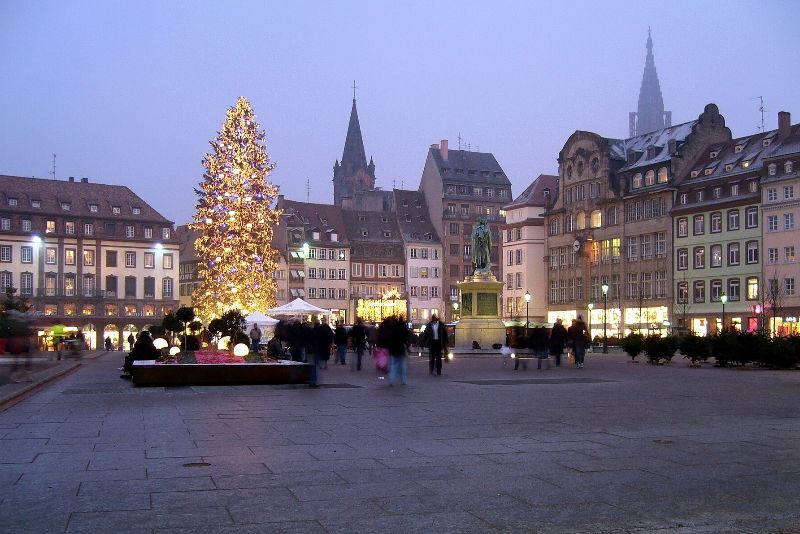
Colmar is the natural headquarters for an Alsace trip. Its old town is compact and walkable, with canal-side houses in the quarter known as Little Venice, the old Customs House, and the Unterlinden Museum, home of the famous Isenheim Altarpiece. The town is also the birthplace of Bartholdi, the sculptor of the Statue of Liberty, and a museum in his former home recalls his work. Staying in Colmar gives you a choice of restaurants every evening and puts the most visited wine villages within a short drive.
A typical plan is two or three nights in Colmar with daily excursions along the route, perhaps one day heading north towards Ribeauvillé and Riquewihr, another south towards Eguisheim and the vineyards beyond. Some travellers add a night in Strasbourg at the end before returning to Geneva. In December the whole region turns festive, with Colmar and the wine villages hosting Christmas markets, so the same itinerary works well as a winter escape.
Booking your Alsace trip with a chauffeur
Reserving through AirportsTransfers.ch is done online: you choose the vehicle, see the fixed price for the journey before paying, and settle it by card, Apple Pay or Google Pay. If you arrive by air, your chauffeur tracks the flight, waits if it lands late and meets you in the arrivals hall with a name sign. A Mercedes E-Class suits a couple with a few bags, a V-Class van takes up to seven passengers with room for cases of wine on the way home, and a Sprinter minibus covers larger groups. For village-hopping days, book a chauffeur by the hour (minimum two hours) or arrange a return transfer at the end of your stay. Child seats are available on request, and our team answers on +41 78 346 56 77 by phone or WhatsApp, 24 hours a day.