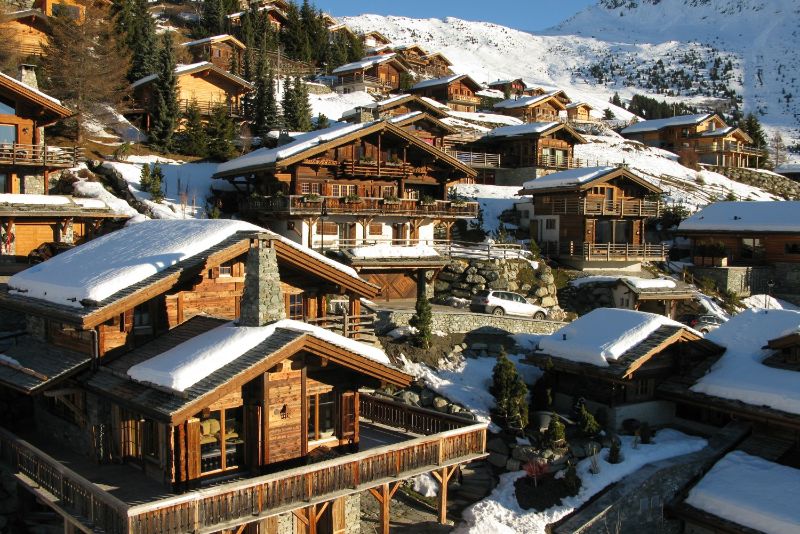
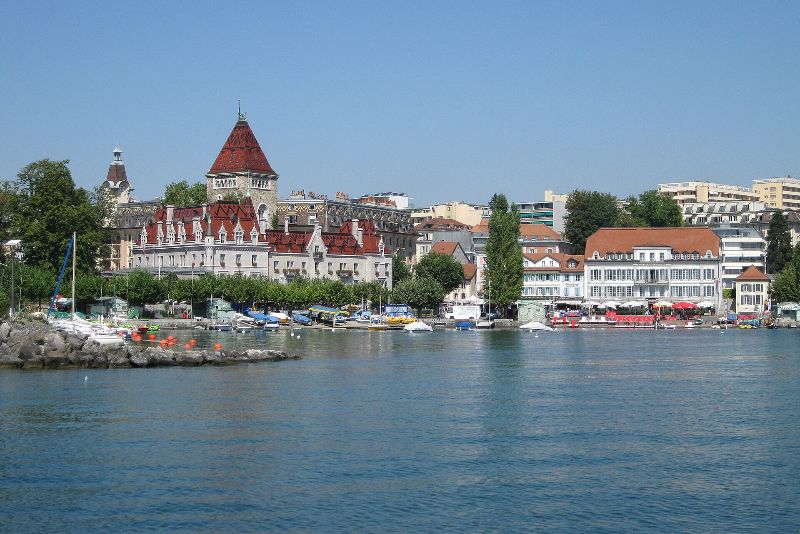
Electric and hybrid vehicles work well for many transfers from Geneva Airport, particularly in the city and along Lake Geneva, while long Alpine routes in winter remain more demanding because cold weather, steep climbs and heavy loads reduce range. AirportsTransfers.ch plans each trip around the distance, the season and the luggage, so whatever vehicle is used is suited to the route.
- City and lake trips: Short distances suit electric vehicles well
- Long Alpine routes: Range planning matters more in cold weather
- Climbs and descents: Climbing uses energy, descents recover some of it
- Luggage and skis: Heavy loads and roof boxes affect efficiency
- Charging: Networks are growing, but stops add time
Why the Alps are a special case
Most electric car range figures are measured in mild conditions. An Alpine transfer combines several factors that reduce real-world range: low temperatures, energy used to heat the cabin and battery, long climbs from the valley to resorts, winter tyres and often a vehicle full of passengers, luggage and skis.
None of this rules out electric vehicles, but it means planning matters. A trip to Annecy, about 44 km and 40 minutes from the airport, or to Lausanne, around 61 km and 45 minutes, is well within comfortable range in any season. A winter transfer to St. Moritz, roughly 400 km and 5 hours, or to Val d'Isère, about 180 km and 2 h 45 with a long final climb, asks much more of a battery.
Descents help, because electric and hybrid vehicles recover energy through regenerative braking. The return trip from a resort to Geneva typically uses less energy than the climb up, which works in an EV's favour.
Snow and ice add another layer. Winter tyres are needed on every vehicle, whatever its powertrain, and heavy electric vehicles benefit from the same careful driving on snowy hairpins as any other. Chains may be required on some mountain roads in heavy snowfall, and the vehicle must be equipped for that too.
Hybrids as a middle ground
Hybrid vehicles combine a combustion engine with an electric motor. On Alpine routes they offer some of the efficiency benefits of electric driving, particularly in stop-start traffic and on descents, without the range planning that a long winter trip requires of a fully electric car. For transfer operators, they can be a practical bridge while charging infrastructure in mountain areas continues to develop.
For passengers, the experience is largely the same: a quiet cabin, smooth acceleration and the same comfort. What matters more is that the vehicle has enough space for the group and its equipment.
Vehicle technology in this area is changing quickly, with larger batteries, faster charging and electric vans becoming more common. Over the coming years, longer mountain routes are likely to become easier for fully electric vehicles. For now, matching the vehicle to the route remains the sensible approach.
Charging and time on the road
Fast-charging networks along Swiss and French motorways have grown considerably, and many resorts now have chargers too. Still, a charging stop on a long transfer adds time, and in peak periods chargers can be busy. For travellers with a tight schedule, such as a flight to catch or a ski school to meet, that uncertainty needs to be factored in.
A good operator plans this before the trip rather than during it, choosing a vehicle and route that get passengers to their destination without unplanned stops.
- Short city and lake transfers: well suited to electric
- Long winter mountain routes: range planning is essential
- Heavy loads and skis: allow for higher energy use
- Tight timings: avoid relying on an en-route charge
- Return trips downhill: generally more efficient
What matters most for passengers
Whatever powers the vehicle, the essentials of a good transfer are the same: enough room for everyone and their bags, winter tyres and equipment suited to snowy roads, a chauffeur who knows the mountain routes, and a reliable arrival time. A vehicle that is ideal in Geneva may not be the right one for a family of six with skis heading to Verbier, about 160 km and 2 hours away.
If footprint is a priority for you, filling a vehicle is one of the most effective steps you can take. One van carrying a whole family or group is generally better than several cars, whatever their powertrain.
Booking a transfer suited to your route
AirportsTransfers.ch operates Mercedes vehicles from the Business Sedan (E-Class) and First Class Sedan (S-Class) to the V-Class van and Sprinter minibus. You see a fixed price per vehicle before paying online by card, Apple Pay or Google Pay. Meet and greet with a name sign and flight tracking are included, child seats are available on request and skis are declared at booking so the right vehicle is allocated.
Questions about vehicles for a particular trip can be answered on +41 78 346 56 77, by phone or WhatsApp.